

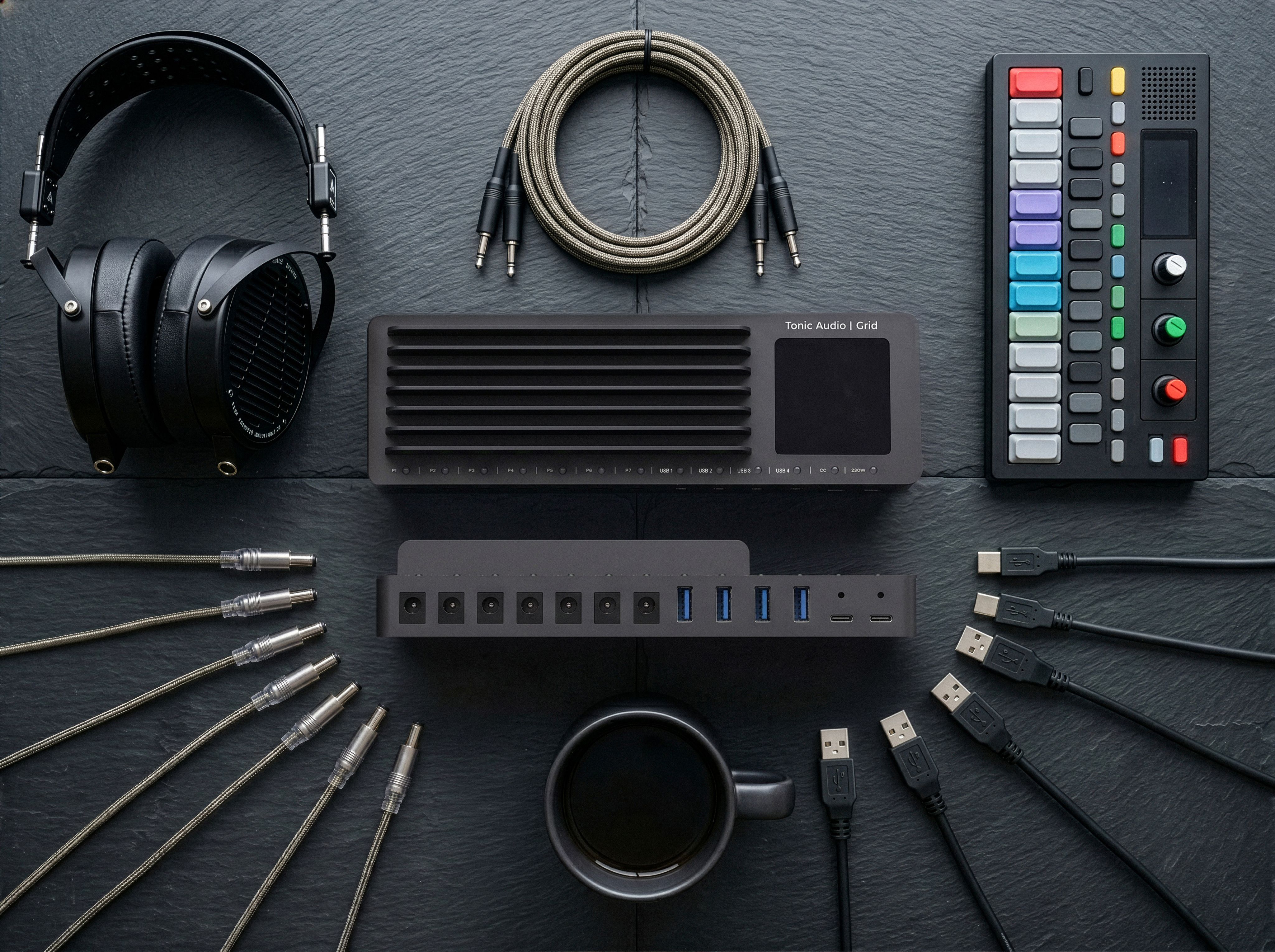
Programmable power for your studio or live setup
From synths and grooveboxes to pedals and your laptop, Grid runs everything from one unit. Set each channel to what its device needs, and see what every channel is doing on the touchscreen.
- Programmable channels.
- Seven DC channels, each with its own voltage, current limit, and polarity, set to match the device on the other end. Locking barrel jacks keep every cable in place.
- Real-time readouts.
- The touchscreen shows set and measured voltage and current for each channel, plus the total power budget, as it happens. Change any channel right on the screen.
- Laptop power.
- The USB-C PD port charges a laptop or tablet at up to 100W, and the same cable connects your computer to the four USB-A ports for your interface and controllers.
- One supply.
- Grid replaces the drawer of wall warts, splitters, and daisy chains behind your rig, and runs from a single USB-C input that takes up to 240W.
The display
See every watt
The touchscreen shows what each channel is set to and what it is actually delivering, plus the total power budget, in real time. Set each channel right on the screen.
- Displays set and measured voltage and current for each channel
- Polarity and watts, channel by channel
- How much of the power budget each channel uses
- The total budget across the whole unit, updated in real time
- Set any channel's voltage, current limit, or polarity on the touchscreen itself
Anatomy
Everything on one Grid
Barrel jacks for your synths and grooveboxes, USB ports for your interface and controllers, and one touchscreen to run all of it.
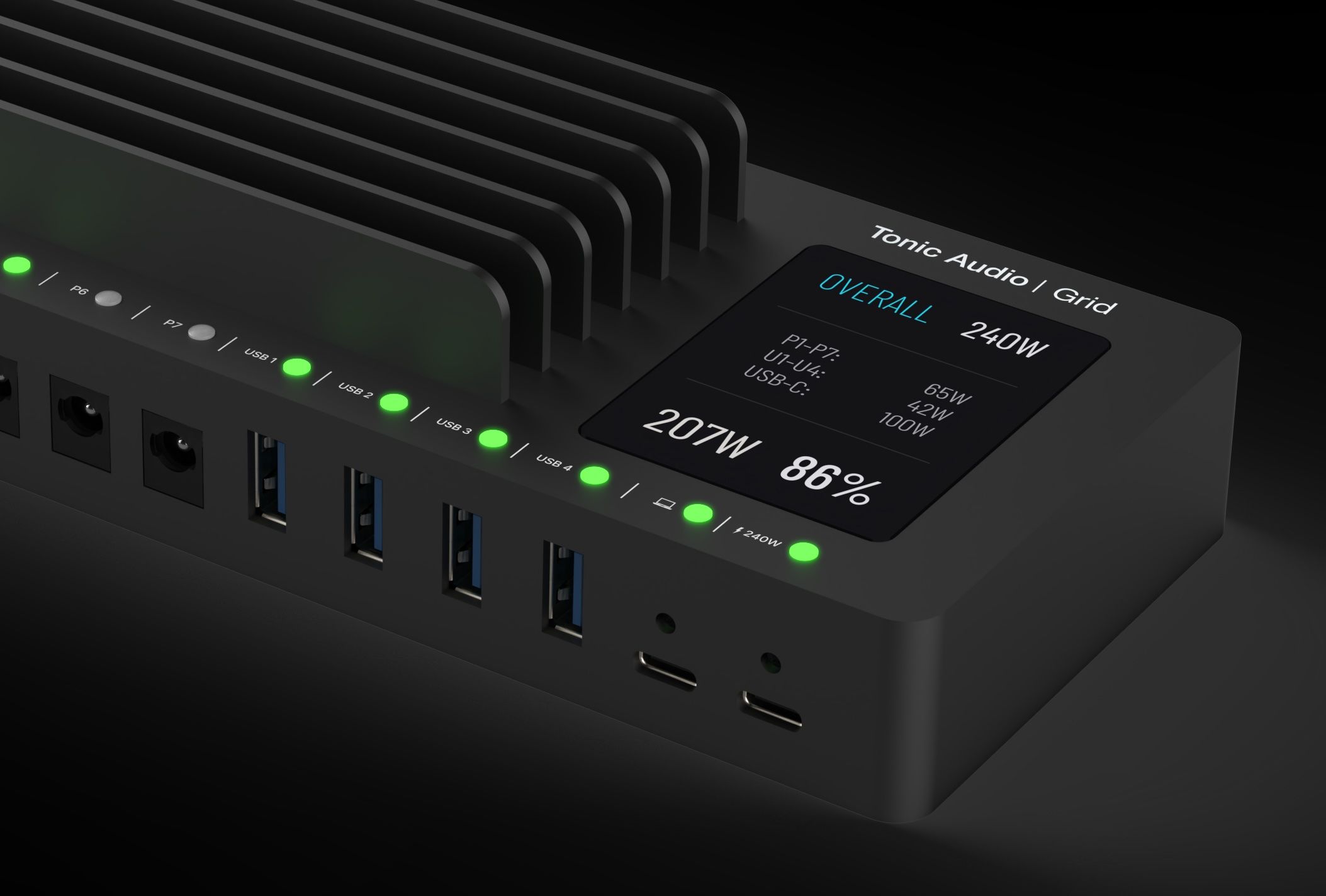
- DC channels
- Seven programmable DC channels, 5–19V, with current limit and polarity, six isolated plus one high-power
- Status LEDs
- A status LED on every port
- USB-A
- Four USB-A 3.2 ports, up to 2.5A each
- USB-C
- Dual USB-C: PD source up to 100W, PD EPR input up to 240W
- Display
- A 2.4″ AMOLED touchscreen
- Barrel jacks
- Locking barrel jacks that hold cables in place
- DC channels
- 7× (5–19V)
- USB-A
- 4×
- USB-C
- 2×
- EPR input
- up to 240W
- PD out
- up to 100W
- Display
- 2.4″ AMOLED
Dark anodized aluminum, with a finned lid that doubles as the heatsink.
Channel status
Status at a glance
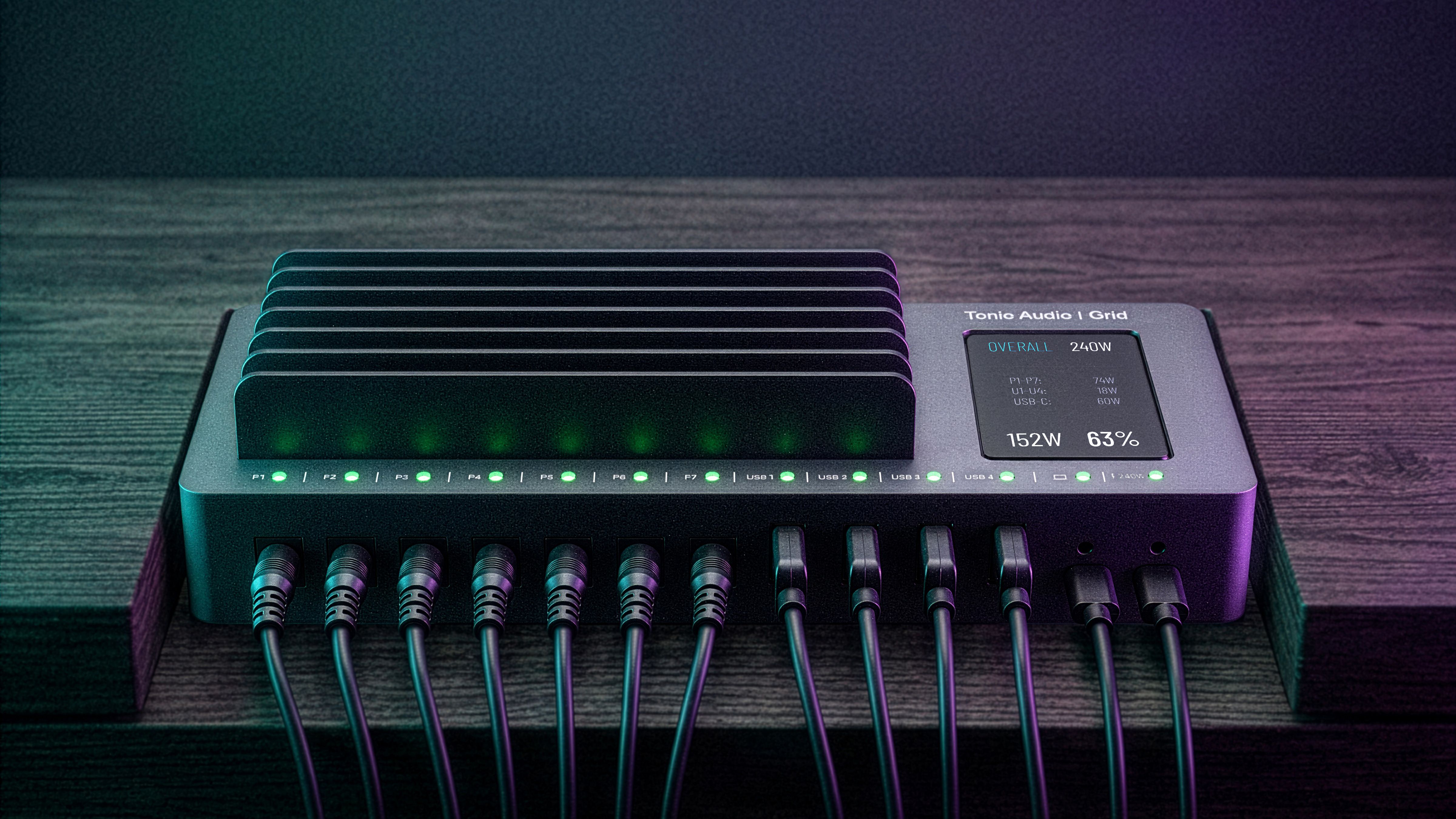
Every port has its own status LED. Color shows each channel's state, and blinking marks a fault.
- Ch 1On
- Ch 2On
- Ch 3On
- Ch 4Loaded
- Ch 5On
- Ch 6Fault
- Ch 7On
- A color-coded status LED on every port
- A short circuit shuts that channel down, flags it on screen and blinks its LED
- Faults blink, so a problem channel stands out
- Plug a device in or out and the other channels stay undisturbed
Plug in everything
One Grid, the whole setup
One input powers your whole rig. Each channel is set to what its device needs, and one power budget is shared across every channel.
Start with your synths and grooveboxes, then add the rest of the rig: drum machines, samplers, an audio interface, pedals. Each one gets its own voltage, current limit, and polarity from the same unit.
- A factory device database of ready-made power profiles
- Save your own presets for the rigs you build
- Recall a whole setup at once, every channel included
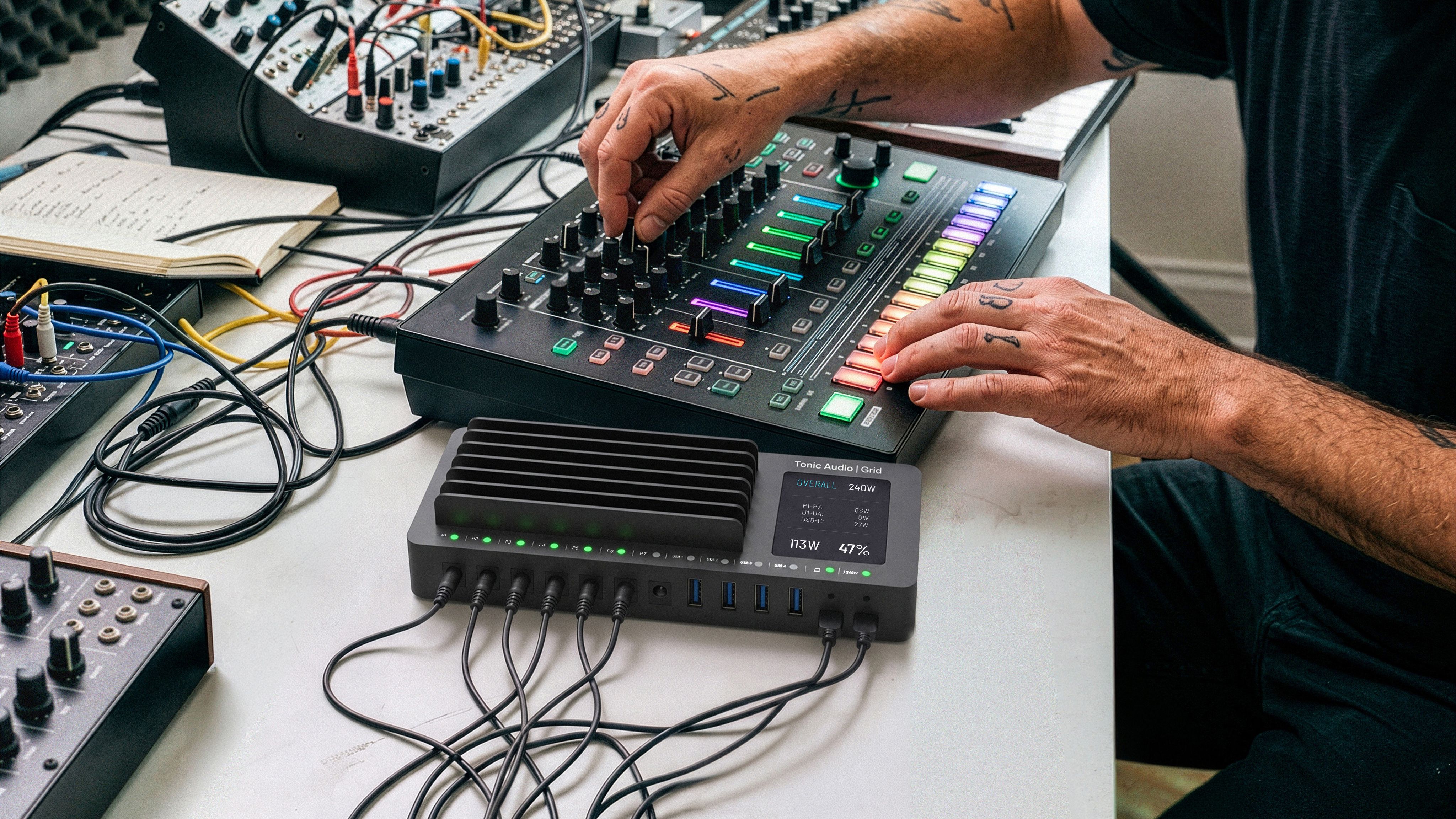
Where it lives
Studio, stage, or in your bag
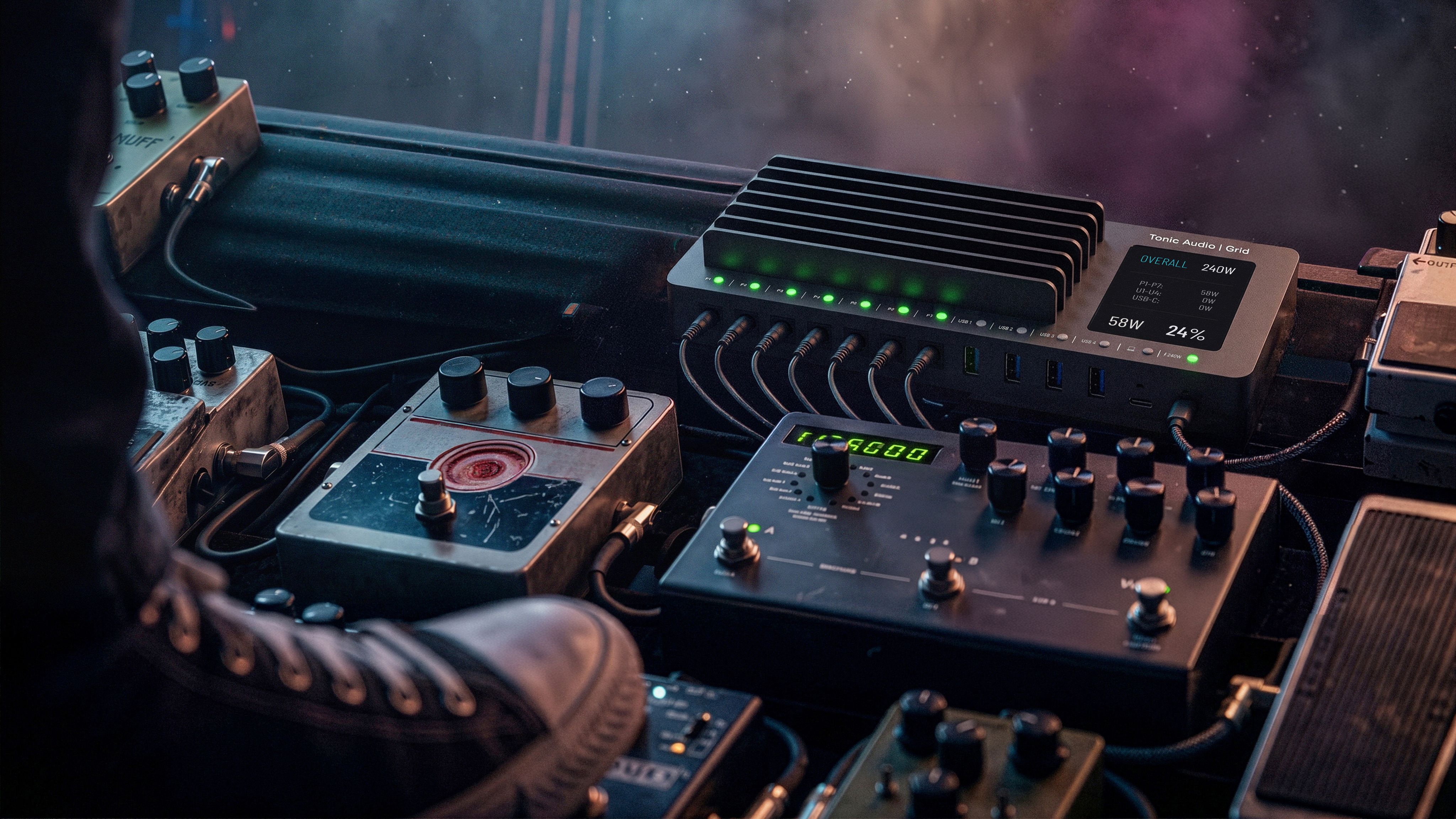
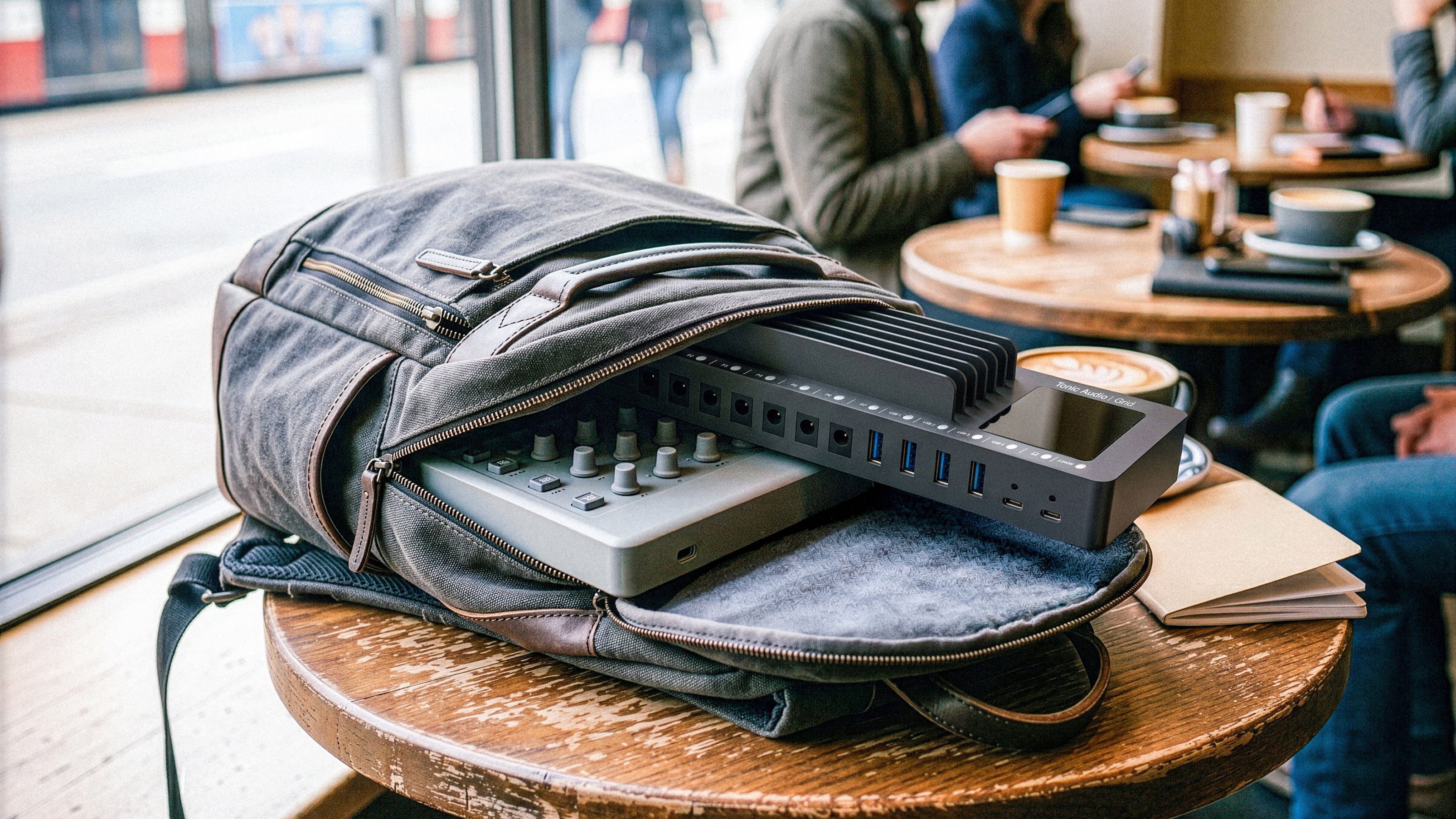
Grid sits where your gear does, whether that is behind a synth rack, under the desk, or on a pedalboard.
USB-C PD out
Powers the laptop too
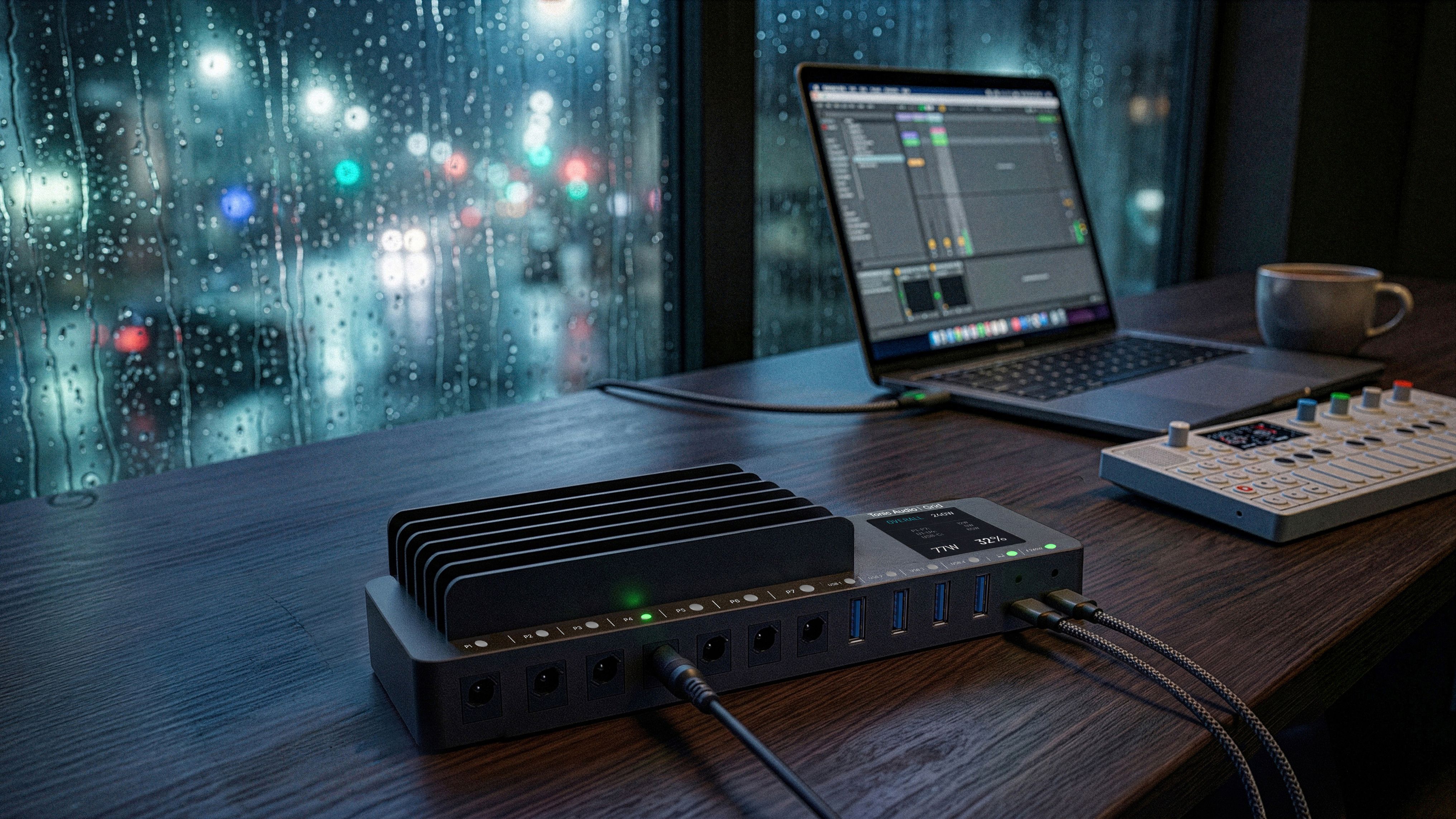
The USB-C port charges a laptop or tablet, and it's also connected to the four port USB hub built into Grid, so your computer and your USB gear share one connection.
- Charge a laptop or tablet from the USB-C PD port, up to 100W
- One cable from your laptop powers it and connects the four USB-A ports
- Power for the laptop depends on the charger feeding Grid
What it replaces
Retire the pile of adapters
Grid takes the place of everything you need to plug in just to power your gear.
- A wall wart for every voltage
- A USB hub with adapter cables
- Daisy chains
- Splitters
- Guessing the voltage
- An extension strip
A synth or groovebox rig usually ends up with a drawer of wall warts, one for each device. Fixed-voltage pedalboard supplies cover pedals but not most synths, and USB hubs with adapter cables add parts of their own.
Two options
Choose your Grid
Same unit, same ports, same screen. The difference is the power input: bring your own USB-C PD charger, or get the 240W EPR adapter in the box.
Grid Core
- Bring your own 100W+ USB-C PD charger
- EPR cable included
- Locking DC cable set included
- The same unit: Seven programmable channels, four USB-A ports, dual USB-C, touchscreen
Grid 240
- The 240W EPR adapter included
- EPR cable included
- Locking DC cable set included
- The same unit: Seven programmable channels, four USB-A ports, dual USB-C, touchscreen
Reserve
Reserve your Grid
Skip the drawer of adapters and put one Grid behind your rig. The button below opens the reservation page, where you can reserve your Grid.